When a homeowner needs masonry work, one of the first places they may look is Google.
They search for masonry contractor near me, brick repair contractor, stone mason in [city], chimney repair near me, and concrete and masonry contractor.
Before they ever visit a website, Google may show several local businesses directly in Maps.
That means homeowners can immediately compare reviews, ratings, photos, services, website, phone number, and location or service area.
For masonry contractors, this makes Google Maps one of the most important places to build local visibility.
One simple way to look at it is this: the more complete, accurate, and relevant your Google Business Profile is, the better chance your business has of appearing in the Google Map Pack. The Map Pack is the local section that appears near the top of Google when someone searches for a service in their area, usually showing a map and a few nearby businesses. For masonry contractors, this can be extremely valuable because homeowners often compare companies directly from that section before choosing who to call. In this guide, we’ll cover the profile improvements, review strategies, photos, website pages, and local SEO signals that can help strengthen your chances of showing up and turning that visibility into real estimate requests.
What Is Google Maps SEO?
Google Maps SEO is the process of improving the local signals around your masonry business so you have a better chance of appearing when nearby homeowners search for masonry services.
For a masonry contractor, this can include your Google Business Profile, customer reviews, real project photos, accurate service areas, service pages, location pages, local project examples, consistent business information, and relevant local mentions.
The goal is not only to appear in Google Maps. The real goal is to make your business easier to find, easier to trust, and easier to contact.
Why It Matters
Masonry is a trust based service. Homeowners may be dealing with cracked brick, deteriorating mortar, chimney damage, failing steps, damaged stonework, or retaining wall issues. Many of them do not know the technical side of the work, so they rely on visible proof before contacting a contractor.
That proof often starts in Google Maps.
Before a homeowner calls, they may compare your reviews, project photos, business description, service area, website, and overall presentation against other masonry contractors nearby. If your profile looks incomplete or inactive, they may keep scrolling. If your profile looks professional, current, and supported by real proof, you give them more confidence to take the next step.
BrightLocal’s 2026 Local Consumer Review Survey found that 2 in 5 consumers read reviews every time they look for a business, and Google remains the most used review platform, with 71 percent of consumers using Google to read local business reviews. For masonry contractors, that means your Google presence can directly affect whether homeowners trust you enough to call.
Imagine two masonry contractors appear in Google Maps for the same search.
The first contractor has a basic profile, a few old photos, limited reviews, and no clear project examples.
The second contractor has recent brick repair photos, chimney restoration examples, detailed customer reviews, accurate service information, and a website showing completed masonry projects.
Even if both companies do quality work, the second contractor gives homeowners more evidence. That evidence can be the difference between being ignored and receiving the estimate request.
Do not think of Google Maps SEO as only a ranking strategy. Think of it as a trust and conversion strategy. Showing up is important, but what homeowners see after they find you is what often determines whether they contact you.
At GiveMeSomeLeads, we see Google Maps SEO as part of a complete customer acquisition system. Visibility creates the opportunity, but reviews, photos, website quality, clear services, and fast response help turn that opportunity into real masonry leads.
Complete Your Google Business Profile
Start with the foundation.
Your Google Business Profile should clearly explain who you are, what masonry services you provide, where you work, and how homeowners can contact you.
Make sure your profile accurately includes:
- Business name
- Primary category
- Relevant additional categories
- Phone number
- Website
- Hours
- Service areas
- Services
- Business description
- Real project photos
Do not treat these fields as filler. They help Google and homeowners understand your company.
Use your real business name. Do not add extra keywords unless they are genuinely part of your official business name. A clean, accurate profile usually builds more trust than one that looks forced or spammy.
Why It Matters
Your Google Business Profile may be the first complete impression a homeowner has of your masonry company. Before they visit your website, they may already be judging whether your business looks active, legitimate, and professional.
A complete profile reduces uncertainty. It gives homeowners the basic information they need and gives Google clearer information about your business.
BrightLocal’s local SEO statistics page reports that customers are 2.7 times more likely to consider a business reputable if they find a complete Business Profile on Google Search and Maps. For a masonry contractor, profile completeness can influence trust before the homeowner ever reaches your website.
A homeowner searches for chimney repair near them.
If your profile has no website, limited photos, missing services, unclear hours, and little proof of recent work, they may continue comparing other contractors.
But if your profile clearly shows chimney repair, brick restoration, service areas, recent project photos, customer reviews, and a working website link, that homeowner has more reasons to contact you.
Review your profile from the homeowner’s perspective.
A Google Business Profile should not be treated as a one time setup. It should grow with your business. Every new review, project photo, service update, and profile improvement helps strengthen your local presence over time.
Choose the Most Accurate Business Category
Your primary category helps Google understand what type of business you operate.
For a company focused mainly on masonry, Masonry Contractor may be the most relevant primary category.
Additional categories can make sense when they accurately reflect major services you truly provide. For example, a masonry business may also fit categories related to chimney services, concrete, or general contracting depending on the actual work performed.
The important part is accuracy.
Do not choose categories only because they might bring more visibility. Choose categories that match the work you actually want more of.
If the answer is no, leave it out.
Why It Matters
The wrong categories can create the wrong inquiries.
More visibility is not always better if it brings homeowners looking for services you do not want, do not specialize in, or cannot profitably deliver.
Accurate categories help position your masonry business around the services that matter most.
A masonry company adds too many broad categories because it wants to appear for more searches. The business starts receiving inquiries for unrelated repair work, low value jobs, or general construction projects that do not match its best services.
Another masonry company keeps the profile focused. It chooses categories that match its real work, then supports those categories with service pages, project photos, reviews, and website content.
The second company may receive fewer random inquiries, but the lead quality is stronger.
Do not optimize for the most categories. Optimize for the clearest business identity.
The goal is not to make Google think you do everything. The goal is to make Google clearly understand what your masonry business does best.
Add Your Masonry Services
Your Google Business Profile should clearly list the masonry services customers can hire you for.
Many homeowners do not search with a broad trade name. They search based on the problem they see or the project they need completed.
Your profile should make those services easy to understand.
Brick and Mortar Work
Brick repair, brick pointing, tuckpointing, mortar repair, and masonry restoration.
Chimney Work
Chimney repair, chimney rebuilding, chimney repointing, and damaged brick replacement.
Stone and Outdoor Masonry
Stone masonry, stone veneer, retaining walls, steps, walkways, patios, and outdoor fireplaces.
Structural and Repair Work
Foundation masonry repair, concrete block work, wall repair, and damaged masonry replacement.
Your Google Business Profile, website, photos, and reviews should all support the same service story.
Why It Matters
Clear services help homeowners quickly understand whether you handle their type of project. They also help your business look more relevant when someone searches for a specific masonry problem.
If your website emphasizes chimney repair but your Google Business Profile does not mention chimney repair, your online presence is weaker than it should be. Your profile, website, and marketing should tell the same story.
A homeowner notices deteriorating mortar and searches for tuckpointing near them.
If your profile only says “masonry contractor,” they may not immediately know whether you handle that specific service.
But if your profile lists tuckpointing, brick repair, mortar repair, and masonry restoration, your business feels more relevant to their problem.
Prioritize the services that are profitable, repeatable, and aligned with the type of work you want more of. Your profile should help attract better projects, not just more random inquiries.
Your marketing should help shape the business you want to build. If certain masonry services generate better projects and better customers, those services should be clearly visible across your profile, website, project pages, and future content.
Set Up Your Service Area Properly
Many masonry contractors travel to the customer’s property instead of serving people from a storefront. That makes your service area an important part of your Google Business Profile.
Your service area should reflect the places where you actually want more masonry projects.
Do not list every city you might be willing to drive to one day. That can create weaker inquiries, longer travel time, and less focused local visibility.
A better service area strategy considers things like:
- Project value
- Travel time
- Profit margin
- Past project history
- Close rate
- Customer quality
- Markets where you want to grow
If your best masonry projects usually come from specific suburbs, towns, or neighborhoods, those areas should be reflected across your Google Business Profile, website content, location pages, and project examples.
Why It Matters
Not every location has the same value to your business.
One area may generate many small brick repair calls with low profit. Another area may generate fewer inquiries but stronger projects like chimney rebuilds, stone veneer, retaining walls, or full masonry restoration.
A focused service area helps you build visibility in the places where you actually want to win more work.
A masonry contractor lists every city within a wide driving radius because he wants more calls.
At first, the phone rings more often, but many of the inquiries come from far away areas for small repairs that are not worth the travel time.
After reviewing the lead quality, he focuses his Google profile, website, and location pages around the towns where he already gets better projects and stronger margins.
The result is a more focused local SEO strategy and a better business strategy.
Your service area should not be based only on distance. It should be based on where you can win profitable work and deliver a strong customer experience.
Build visibility where you actually want work. Strong Google Maps SEO is not about appearing everywhere. It is about becoming easier to find in the markets that matter most to your masonry business.
Upload Real Masonry Project Photos
Masonry is visual work. Use that advantage.
Homeowners want proof before they call. They want to see the type of work you do, the quality of the finished result, and whether your company has handled projects similar to theirs.
- Brick repair
- Repointing
- Chimney restoration
- Stone veneer
- Retaining walls
- Steps and walkways
- Patios
- Outdoor masonry
- Before and after transformations
A profile with real completed work gives homeowners more confidence than a profile with only a logo, a vehicle photo, or a few outdated images.
Why It Matters
Photos help homeowners evaluate your work quickly.
Many homeowners do not know the technical difference between brick pointing, tuckpointing, structural masonry repair, or stone veneer installation. But they can recognize clean work, damaged brick, restored mortar, finished stonework, and a professional looking result.
Good photos make your experience easier to see.
Google has reported that businesses with photos on their Business Profiles receive 42 percent more requests for directions and 35 percent more website clicks than businesses without photos. For masonry contractors, this matters because project photos can help turn a profile view into a real action.
A homeowner needs brick steps repaired.
One masonry contractor has no clear examples of step repairs on their Google profile. Another contractor shows before photos, repair progress, and final photos of completed brick step projects.
The second contractor gives the homeowner more confidence because the proof is visible before the first call.
Create a simple photo habit. For every project, capture the problem, the work in progress, and the finished result. You do not need professional photography every time. You need clear, real, consistent proof.
Do not only tell homeowners you are an experienced mason. Show enough completed work that they can see it for themselves. Real project photos help turn your Google Business Profile into a trust building asset.
Document Before and After Transformations
Before and after photography is especially powerful for masonry contractors because the problem is often visible.
A homeowner may be dealing with cracked mortar, loose brick, water damaged chimney brick, deteriorating steps, failing joints, or worn stonework. When you show the condition before the repair and the finished result after the work is complete, you make the value of your service easier to understand.
Cracked mortar, damaged brick, worn stone, leaning wall, or chimney deterioration.
Preparation, repair work, rebuilding, repointing, or replacement.
Restored brickwork, clean mortar joints, stable structure, finished stone, or completed masonry repair.
This gives you useful material for your Google Business Profile, website, project pages, social media, estimates, and future advertising.
Why It Matters
Before and after photos tell a story quickly.
A final photo can show the result, but a before and after sequence shows the transformation. That matters because homeowners want to know whether you can solve the same kind of problem they are seeing on their property.
For masonry, this is especially valuable because many repairs involve safety, durability, water damage, matching existing materials, or preserving the appearance of the home.
A masonry company completes a chimney repair and takes only one final photo.
The finished work may look good, but the homeowner viewing it online does not understand how bad the chimney was before.
Another company shows the damaged chimney, the repair process, and the restored result. That second example is more persuasive because it explains the work visually.
Whenever possible, take the before and after photos from the same angle. This makes the improvement easier to understand and gives the project more impact.
Every completed masonry project should become more than finished work. It should become proof. When you document projects properly, each job can help attract the next homeowner.
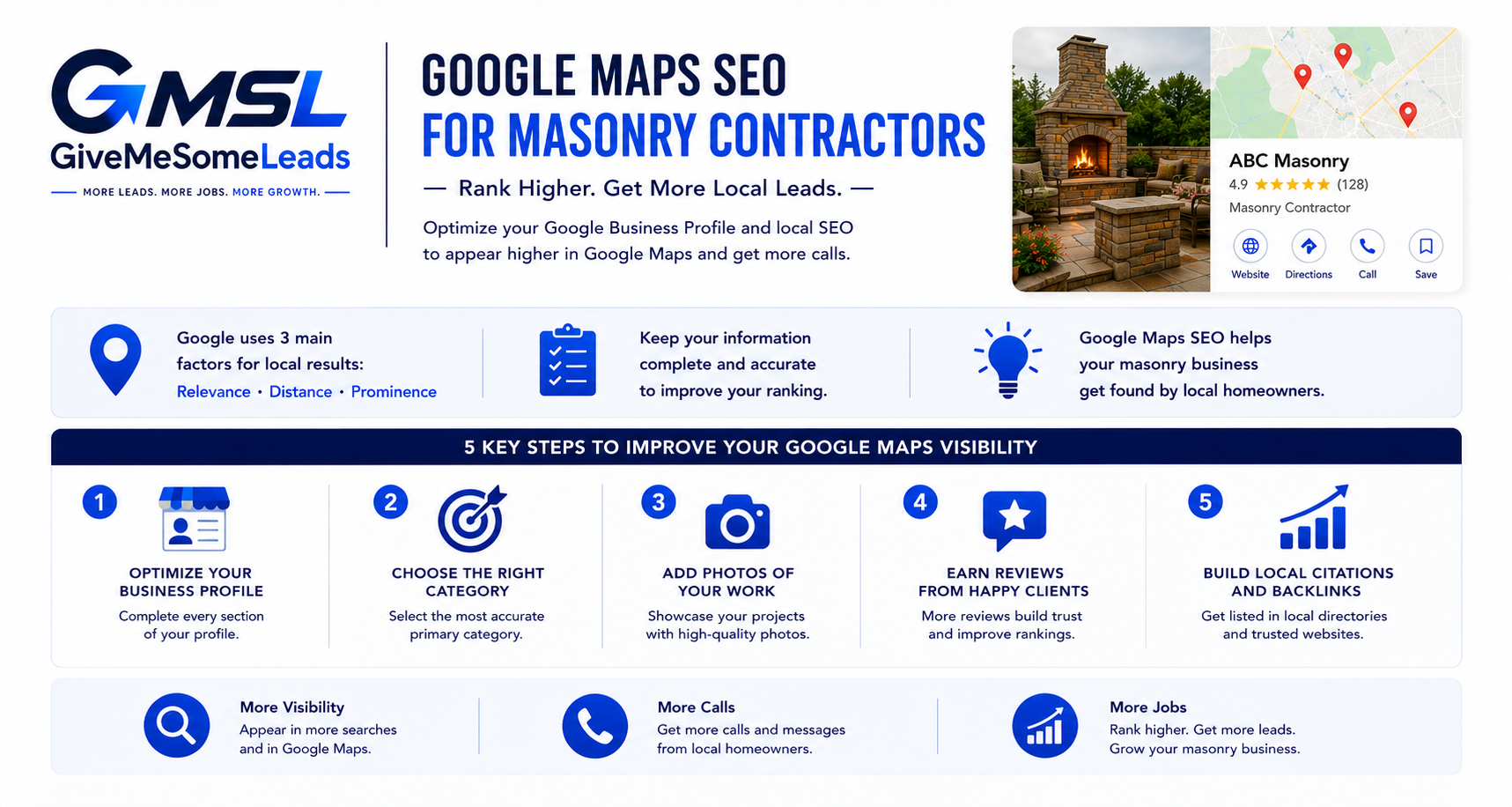
📊 Click the diagram to view a larger version. After opening it, turn your phone sideways for the best viewing experience.
Build a Consistent Review Process
Reviews should not be left to chance.
Many satisfied homeowners are willing to leave a review, but they need to be asked at the right time and given a simple way to do it. For masonry contractors, the best moment is usually after the final walkthrough, when the customer has seen the finished work and confirmed they are happy with the result.
The goal is not to pressure customers. The goal is to make it easy for happy customers to share their real experience.
Why It Matters
Reviews reduce risk for future homeowners.
Masonry work can feel expensive, technical, and difficult to judge before hiring. A homeowner may not know how to evaluate mortar joints, brick matching, stonework quality, chimney repair, or long term durability. Reviews help them understand whether your company communicates well, shows up on time, protects the property, cleans up properly, and delivers what was promised.
A masonry company with consistent, recent reviews gives homeowners more confidence than a company with old reviews or very little feedback.
BrightLocal’s local consumer research has consistently shown that reviews play a major role in how people evaluate local businesses. For masonry contractors, this matters because homeowners are often comparing several businesses before choosing who to call. A strong review profile can help your company stand out before the homeowner ever reaches your website.
Two masonry contractors both complete quality work.
The first contractor rarely asks for reviews. Over time, he only gets a few comments online, even though many customers were happy.
The second contractor has a simple process after every completed job. When the customer is satisfied, he sends a direct Google review link and makes the request easy.
After one year, the second contractor has more recent reviews, more customer stories, and more visible trust. The work quality may be similar, but the online proof is very different.
Ask soon after the project is complete. Waiting too long makes the review less likely because the customer has already moved on.
Advertising tells homeowners what your company can do. Reviews let past customers confirm it for you. A consistent review process turns completed masonry projects into long term trust signals.
Encourage Detailed Reviews Naturally
Do not script what customers should say.
A genuine review is stronger when it sounds real. Instead of telling customers exactly what to write, make the process easy and invite them to share a few details about their experience if they are comfortable.
- The type of project
- Communication
- Quality of the repair
- Professionalism
- Cleanup
- Timeline
- Overall experience
A detailed review gives future homeowners more context than a short comment that only says “great job.”
Why It Matters
Detailed reviews help answer questions before the homeowner contacts you.
A homeowner may wonder whether you handle their type of project, whether the finished masonry will look clean, whether the repair will match the existing brick or stone, whether your team communicates clearly, and whether the property will be left clean.
A review that mentions those details can reduce hesitation.
Review quantity matters, but review quality also matters. Homeowners are not only looking at the star rating. They are reading what past customers actually say. For a masonry contractor, reviews that mention specific services like chimney repair, brick pointing, stonework, retaining walls, or masonry restoration can give future customers more confidence than generic praise alone.
A homeowner is nervous about hiring someone for brick repair because they want the new mortar and brickwork to blend with the existing home.
They read a review from a past customer explaining that the masonry company matched the repair carefully, explained the process, protected the property, and cleaned up after the job.
That review does more than say the contractor did good work. It answers real concerns.
Use simple language when asking:
The best reviews do more than improve your rating. They tell the story of your customer experience. For masonry contractors, detailed reviews help future homeowners understand the quality, professionalism, and reliability behind the finished work.
Respond to Reviews
Review responses are not only for the person who left the review. Future homeowners can read them too.
When someone leaves a positive review, respond naturally and professionally. If it makes sense, mention the actual project so the response feels personal.
For negative feedback, stay calm and professional. Avoid public arguments. Even when a review feels unfair, your response shows future homeowners how your company handles communication and conflict.
Why It Matters
Review responses show that your business is active and paying attention.
A masonry contractor who responds professionally looks more organized and customer focused. A contractor who ignores every review may look less engaged. A contractor who argues publicly can create doubt, even if the work quality is strong.
Your response becomes part of your public reputation.
A homeowner compares two masonry companies.
One company has reviews but never responds to them.
The other company thanks customers, mentions completed projects, and handles concerns professionally.
The second company feels more attentive because the homeowner can see that the business cares about customer experience.
Keep responses short, specific, and professional. You do not need to write a long message. A simple response that thanks the customer and acknowledges the project is enough.
Every review response is a public trust signal. For masonry contractors, it shows future homeowners that you care about communication, professionalism, and the customer experience.
Build a Dedicated Masonry Service Page
Your Google Business Profile should connect to a strong website.
If masonry is your primary business, your website should have a dedicated masonry service page that clearly explains what you do, where you work, and why homeowners should contact you.
This page should not be a small paragraph hidden on a general homepage. It should be a strong service page built around the real projects your company wants more of.
Core Services
Brick masonry, stone masonry, chimney repair, tuckpointing, retaining walls, steps, patios, and masonry restoration.
Trust Signals
Project photos, reviews, service areas, years of experience, warranties where applicable, and clear business information.
Conversion Elements
Visible phone number, request estimate button, simple contact form, and mobile friendly layout.
Why It Matters
Google Maps can help homeowners find your business, but your website often helps them decide.
A homeowner may click from your Google profile to your website before calling. If the page is vague, outdated, slow, or missing important service information, you may lose the opportunity even after earning the click.
A dedicated masonry page gives the homeowner a clear path from interest to action.
Google Business Profile performance reporting includes website clicks as one of the actions people can take directly from a profile. That means your website is not separate from your Maps presence. It is part of the local decision journey.
A homeowner finds your Google Business Profile while searching for stone masonry.
They click your website and land on a generic homepage that says “quality construction services.” That does not give them much confidence.
Now imagine they land on a detailed masonry page with stonework examples, chimney repair information, brick repair services, real project photos, reviews, service areas, and a clear estimate button.
The second page does a better job turning the Google Maps visit into a real lead.
Do not make homeowners hunt for the service they need. If masonry is an important part of your business, make it obvious from your website navigation, homepage, service pages, and calls to action.
Your website should support your Google Maps visibility. Ranking in Maps creates the opportunity, but a strong masonry service page helps turn that opportunity into a call, form submission, or estimate request.
Create Pages for Important Masonry Services
Do not expect one page to rank well for every masonry service.
If certain services are important enough to your business, give them dedicated pages. A homeowner looking for chimney repair has different concerns than someone looking for tuckpointing, stone veneer, retaining walls, or brick repair.
Each important service page should answer the questions that match that specific project.
Brick Repair Page
Explain cracked brick, damaged mortar, brick replacement, matching existing materials, and when repair should not be delayed.
Chimney Repair Page
Explain chimney brick damage, water issues, deteriorating mortar, safety concerns, and repair options.
Tuckpointing Page
Explain mortar joint deterioration, warning signs, how the process works, and why timing matters.
Retaining Wall Page
Explain leaning walls, drainage problems, structural concerns, rebuilding, and replacement.
Why It Matters
Specific pages help homeowners feel understood.
A homeowner searching for chimney repair does not want to read a general page that briefly mentions every service. They want to know whether you understand chimney problems, whether you have done similar work, and how to request an estimate.
Dedicated pages also give your website more opportunities to support the services that matter most to your business.
A masonry company offers brick repair, chimney repair, and tuckpointing, but only has one short page that says, “We provide professional masonry services.”
Another company creates separate pages for each major service, adds real photos, answers common questions, explains the process, and includes clear contact options.
The second website feels more helpful because each page matches a specific homeowner need.
Start with your highest value services first. You do not need to build every page at once. Build strong pages for the services that generate better customers, better margins, and better long term opportunities.
If a service generates meaningful revenue, it deserves more than one sentence buried on your homepage. Strong service pages make your website clearer for homeowners and more useful as a lead generation asset.
Build Useful Location Pages
If you serve several important markets, location pages can help communicate where you work.
But location pages need to be useful. Do not copy the same page repeatedly and only change the city name. That creates weak content and does not give homeowners a real reason to trust the page.
A strong location page should include local value, such as completed projects in the area, nearby neighborhoods served, service examples, customer reviews from that market, project photos, and clear contact options.
This page should not only say you serve Dallas. It should explain the masonry services you offer there, show relevant project examples, mention nearby neighborhoods when appropriate, and make it easy for Dallas homeowners to request an estimate.
Why It Matters
Homeowners want to know whether you actually serve their area.
A good location page reassures them that your company works in their market and understands the type of masonry projects homeowners need there. It can also support your local SEO by connecting your services to the specific areas you want to grow in.
A masonry contractor creates ten location pages with the same generic text and only changes the city name.
Those pages feel thin and unhelpful.
Another contractor creates location pages only for important markets. Each page includes project examples, photos, nearby service areas, common masonry services, and a strong estimate CTA.
The second approach is more useful for homeowners and better aligned with long term SEO.
A few strong location pages are usually better than dozens of weak pages. Build pages for the markets where you have real work, real opportunity, and a real reason to compete.
Location pages should not be fake doorway pages. They should help homeowners see that your masonry company is active, relevant, and capable in their local area.
Turn Projects Into Local SEO Pages
A completed masonry project can become more than a gallery photo.
Every finished project gives you a chance to show real experience, real craftsmanship, and real local proof. Instead of only uploading a few images, turn strong projects into simple local SEO pages that explain what the problem was, what work was completed, where the project happened, and what the result looked like.
Chimney Rebuild in Plano, Texas
The Problem: Deteriorated mortar and damaged brick
The Work: Removed damaged materials, rebuilt affected sections, and restored the masonry
The Result: A structurally sound finished chimney that matched the existing home
Then add real photos, the service performed, the city or service area, and a clear estimate request button.
Why It Matters
Project pages are powerful because they are based on real work.
Many contractor websites rely on generic service descriptions that could apply to almost any company. Project pages are different. They show what your business has actually done.
For masonry contractors, this is especially valuable because homeowners want proof. They want to see repaired chimneys, restored brick, finished stonework, retaining walls, patios, steps, and before and after transformations.
A homeowner searches for chimney repair in their area.
They find a masonry contractor with a project page showing a completed chimney rebuild in a nearby city. The page includes the original damage, the repair process, finished photos, and a simple estimate request button.
That page feels more trustworthy than a generic service page that only says “we offer chimney repair.”
Every completed masonry project can become a long term marketing asset. When you document your work properly, one project can strengthen your website, Google Business Profile, local SEO, sales process, and future advertising.
Keep Business Information Consistent
Your core business information should stay accurate across the places homeowners may find you online.
- Business name
- Phone number
- Website
- Hours
- Service areas
- Address where applicable
If something changes, update it everywhere important. That includes your Google Business Profile, website, Facebook page, major local listings, industry profiles, and any platform that sends customers to your business.
Consistency reduces confusion for both homeowners and search platforms.
Why It Matters
Inconsistent business information creates friction.
If a homeowner sees one phone number on Google, different hours on your website, and outdated information on Facebook, they may hesitate. Even if the work quality is strong, the business can look less organized.
For local SEO, consistent information also helps reinforce that your business details are reliable across the web.
A homeowner finds a masonry contractor on Google Maps and decides to visit the website.
The Google profile says the company is open. The website lists different hours. The Facebook page has an old phone number. The homeowner is now unsure which information is correct.
A cleaner setup gives the same business name, phone number, website, and hours everywhere the customer looks.
Create one master version of your business information and use it whenever you update online profiles. This makes it easier to keep everything accurate.
Consistency makes your masonry business easier to trust. Local SEO is not only about rankings. It is also about reducing confusion at every step between discovery and contact.
Build Local Authority
Masonry contractors can build local authority through real relationships.
This does not mean chasing hundreds of random links. It means earning relevant local mentions, referrals, partnerships, and connections from sources that make sense for your business.
The best opportunities usually come from real business activity, not fake SEO tactics.
Why It Matters
Google wants to understand whether your business is legitimate, local, and relevant. Homeowners want the same thing.
When your masonry company is connected to real local businesses, suppliers, associations, and community sources, your online presence becomes stronger and more credible.
Local authority can support SEO, but it can also generate direct referrals.
A masonry contractor builds relationships with local builders, landscapers, and chimney professionals.
Over time, those relationships lead to referrals, project mentions, supplier features, local directory listings, and partnership opportunities.
That kind of authority is difficult for a new competitor to copy quickly because it comes from real business relationships.
Focus on relationships that would be valuable even if SEO did not exist. If the relationship could bring referrals, credibility, or local visibility, it is probably worth pursuing.
The strongest local SEO signals often come from real business activity. A masonry company that builds reputation in the real world has more opportunities to build authority online.
Create Helpful Masonry Content
Customers do not only search for a masonry contractor. They also search for answers to specific problems they are seeing around their home.
A homeowner may not know whether they need tuckpointing, brick repair, chimney restoration, or full masonry rebuilding. They may only know that the mortar is cracking, the chimney looks damaged, the brick is loose, or the retaining wall is starting to lean.
Helpful content gives your masonry business a way to educate homeowners before they are ready to call.
Why It Matters
Helpful content builds trust before the estimate request.
Many homeowners research the problem first. If your website explains the issue clearly, shows experience, and connects the topic back to the right service, you can become the company they trust before they compare several contractors.
This also supports your service pages. A strong article about brick cracks can link to your brick repair page. A chimney repair guide can link to your chimney service page. A tuckpointing article can support your masonry restoration page.
BrightLocal found that 67 percent of consumers often or always look at business reviews after conducting a local business search. That matters because helpful content rarely works alone. A homeowner may read your article, then check your Google reviews, photos, and profile before deciding whether to contact you.
A homeowner searches:
They find your article explaining common causes, warning signs, when cracks may be cosmetic, and when professional repair is needed.
If the article is helpful and includes real project photos, a clear service area, and a simple estimate button, that informational search can become a qualified masonry lead.
If you have answered the same homeowner question many times, turn the best version of that answer into an article. Your real field experience is often the best content source.
Helpful content is not about writing random blog posts. It is about turning real masonry knowledge, customer questions, and project experience into marketing assets that build trust over time.
Do Not Forget Conversion
Ranking in Google Maps is useful only if homeowners contact you.
A masonry contractor can have strong visibility and still lose opportunities if the next step is unclear. Once a homeowner finds your profile or website, they should immediately understand how to call, request an estimate, view your work, and confirm that you serve their area.
Your profile and website should make the next step obvious.
- Visible phone number
- Click to call on mobile
- Request estimate button
- Simple contact form
- Clear service area
- Real project photos
- Customer reviews
- Fast loading pages
- Strong mobile layout
Why It Matters
Every unnecessary obstacle can reduce the number of leads you generate.
If the phone number is hard to find, the website is slow, the form asks too many questions, or the estimate button is buried, homeowners may leave and contact another contractor.
Google Maps SEO should not stop at visibility. The full goal is visibility that turns into real calls, forms, estimates, and customers.
A homeowner finds a masonry contractor in Google Maps and clicks the website.
The page has project photos and service information, but the phone number is small, the contact form is hard to find, and the call button does not work well on mobile.
Another contractor has a clear call button, a simple estimate form, real project photos, and service areas listed near the top.
The second contractor makes it easier for the homeowner to take action.
Open your website on your phone and pretend you are a homeowner in a hurry. Can you understand what the company does, see proof, and request an estimate within a few seconds?
Visibility creates the opportunity. Conversion turns that opportunity into a lead. A strong masonry marketing system needs both.
Respond Quickly to Google Maps Leads
Local SEO does not stop when the phone rings.
A homeowner who contacts you from Google Maps may also be contacting two or three other masonry contractors. If you respond slowly, the opportunity can disappear even if your ranking, reviews, and photos did their job.
For missed calls:
The faster and more professionally you respond, the better chance you have of turning the lead into an estimate.
Why It Matters
Homeowners often want momentum. If they are dealing with a damaged chimney, loose brick, crumbling mortar, or a retaining wall concern, they may not wait days for a response.
Fast response does not only help you win more leads. It also creates a better first impression. A contractor who answers quickly feels more organized, more reliable, and easier to work with.
A homeowner submits a masonry estimate request to three companies.
One responds the same day, asks a few useful questions, and schedules a visit.
The second responds two days later.
The third never replies.
Even if all three contractors are capable, the first company has a major advantage because they made the process easier for the homeowner.
Have a simple missed call process. If you cannot answer immediately, call back quickly and send a short text so the homeowner knows you received the request.
Ranking generates the opportunity. Response time determines whether you get a real chance to win it. Google Maps SEO should connect directly to your sales process, not stop at the phone call.
Track More Than Rankings
Being visible in Google Maps is important, but rankings alone do not tell the full story.
A masonry contractor can rank well and still fail to generate profitable work if the wrong people are finding the business, the profile does not create trust, the website does not convert, or calls are not being answered.
Instead of only asking, “Are we ranking higher?” track the full path from visibility to revenue.
Why It Matters
Rankings can be misleading.
You may rank for searches that bring low quality inquiries. You may get more profile views but no calls. You may get more calls but few qualified projects. You may get more leads but not enough booked customers.
The real goal is not to rank for bragging rights. The real goal is to generate profitable masonry customers.
Google Business Profile performance reporting includes actions such as calls, website clicks, messages, bookings, and direction requests. This is important because Google itself separates visibility from customer actions, which means contractors should also look beyond rankings and measure what people actually do after finding the profile.
A masonry contractor improves from position five to position two in Maps for several local searches.
At first, that looks like a win.
But after reviewing the numbers, the contractor sees that most calls are for small repairs outside the ideal service area. Very few turn into estimates, and almost none become profitable customers.
Another contractor ranks slightly lower but receives fewer, stronger inquiries for chimney rebuilds, brick restoration, and stonework projects. That contractor may have the better marketing system because the leads are closer to real revenue.
Track at least four numbers every month:
- Profile visibility
- Phone calls and form submissions
- Qualified estimate requests
- Booked customers and revenue
If you only track rankings, you may miss the real business story.
Rankings are a diagnostic metric. Customers are the business outcome. At GiveMeSomeLeads, we believe Google Maps SEO should be measured by the opportunities and revenue it helps create, not only by where a business appears in search results.
Keep Improving Over Time
Google Maps SEO is not a one time setup.
A masonry contractor should not complete the Google Business Profile once and then ignore it for the next few years. Local visibility and trust are built through consistent updates, real project proof, recent reviews, better website pages, and stronger customer experience.
Every month, review and improve the assets that support your local presence.
- Updating business information
- Uploading recent masonry project photos
- Requesting reviews from satisfied customers
- Responding to reviews
- Publishing project pages
- Improving service pages
- Reviewing lead quality
- Updating important location pages
- Checking calls, forms, and customer outcomes
Small improvements compound over time.
Why It Matters
A competitor can copy basic information quickly. They can create a profile, add services, upload a few photos, and build a simple website.
What they cannot easily copy is years of real reviews, consistent project documentation, local content, before and after photos, customer proof, and strong service pages.
That is why consistency matters. Over time, your marketing becomes harder to compete against.
One masonry contractor updates his profile once and then forgets about it.
Another contractor uploads project photos every month, asks for reviews after completed jobs, responds to customers, publishes strong service pages, and documents local projects.
After a year, the second contractor has more visible proof, more recent activity, and a stronger online presence. After several years, that gap becomes much harder for competitors to close.
Set a simple monthly routine. Even one hour per month spent updating photos, reviews, project pages, and lead tracking can make your Google Maps presence stronger over time.
Local SEO rewards consistency. Every finished masonry project, review, photo, and page improvement can strengthen the system. The contractors who win long term are usually the ones who keep improving while others stop after the basic setup.
Google Maps SEO Checklist for Masonry Contractors
A strong Google Maps SEO strategy is built from many small pieces working together.
You do not need to make everything perfect in one day. The goal is to build a stronger local presence over time, one improvement at a time.
Use this checklist as a practical starting point.
Google Business Profile Foundation
- Complete your Google Business Profile
- Use your correct business name
- Choose the most accurate primary category
- Add relevant additional categories only when they truly fit
- Add your phone number, website, hours, and service areas
- Write a clear business description
- List your main masonry services
Trust and Proof
- Upload real masonry project photos
- Add before and after examples
- Show brick repair, chimney repair, stonework, retaining walls, patios, steps, and restoration work
- Ask satisfied customers for Google reviews
- Respond to reviews professionally
- Keep your profile active with recent updates
Website and Local SEO
- Build a dedicated masonry service page
- Create pages for important services like brick repair, chimney repair, tuckpointing, stone masonry, and retaining walls
- Create useful location pages for important markets
- Turn completed projects into local SEO pages
- Keep business information consistent across important listings
- Build legitimate local relationships and mentions
Conversion and Tracking
- Make your phone number easy to find
- Use click to call on mobile
- Add a simple estimate request form
- Make service areas clear
- Track calls, forms, qualified leads, estimates, customers, and revenue
- Review lead quality, not only rankings
Why It Matters
A checklist helps contractors stay consistent.
Google Maps SEO is not one single tactic. A masonry contractor can have good reviews but weak photos. Another can have strong photos but no service pages. Another can rank well but lose leads because the phone number is hard to find.
The strongest results usually come when the profile, website, photos, reviews, service pages, location pages, and follow up process all support each other.
A masonry contractor updates his profile once and assumes the job is done.
Another contractor follows a monthly checklist. He adds photos from recent projects, requests reviews, responds to customers, improves service pages, publishes local project examples, and tracks which leads become real estimates.
After a year, the second contractor has a stronger online asset because the improvements kept stacking.
Do not treat this checklist as a one time project. Review it monthly and choose a few items to improve. Small consistent updates are usually easier and more effective than trying to fix everything at once.
The contractors who win online are not always the ones who make the biggest changes overnight. They are often the ones who keep improving their visibility, trust signals, project proof, and conversion process month after month.
Common Google Maps SEO Mistakes
Many masonry contractors lose opportunities because of avoidable local SEO mistakes.
Some mistakes hurt visibility. Others hurt trust. Some do not stop homeowners from finding the business, but they do stop homeowners from contacting the business.
Adding extra keywords to the business name can make the profile look spammy and may create policy issues. Use the real business name.
More categories do not automatically mean better leads. Categories should reflect the work you actually provide and want more of.
A large service area may look impressive, but it can attract weak inquiries from locations that are not profitable or practical.
Masonry is visual. Stock photos do not prove that your company can do the work. Real project photos are much stronger.
Reviews affect trust. If you do not ask for reviews, respond to reviews, or build a review process, you leave reputation growth to chance.
Copying the same page and changing only the city name does not create real value. Location pages should include useful local proof.
Content should reflect real homeowner questions, masonry problems, and project experience. Generic content does not build much trust.
Ranking higher feels good, but the business outcome is calls, forms, estimates, booked projects, and revenue.
Why It Matters
Mistakes compound just like good habits do.
One weak profile field may not destroy your results. But a weak profile, poor photos, few reviews, unclear services, thin website pages, and no tracking can create a much bigger problem.
Homeowners may still find you, but they may not trust you enough to call.
A masonry contractor appears in Google Maps but has an incomplete profile, no recent photos, few reviews, and a website that does not clearly explain services.
The contractor thinks the problem is ranking.
But the real issue may be trust and conversion. Homeowners are finding the business, comparing it to competitors, and choosing someone who looks more credible.
When results are weak, do not only ask, “Why are we not ranking higher?”
Google Maps SEO is not about gaming the system. It is about making the quality and legitimacy of your real masonry business easier to see online.
Frequently Asked Questions
Does Google Maps SEO work for masonry contractors?
Yes. Masonry is a local service, so Google Maps can help connect contractors with homeowners searching for services in their area.
What affects Google Maps rankings?
Local visibility depends heavily on how relevant your business is to the search, the searcher's location, and how established and credible the business appears locally.
Do Google reviews help masonry contractors?
Yes. Genuine reviews strengthen homeowner trust and are an important part of a strong local presence.
Should masonry contractors hide their home address?
If customers are not served at the address, use a legitimate service-area business setup that reflects how the company actually operates.
Should I create a Google Business Profile for every city?
No. Additional profiles should reflect legitimate, eligible business locations or operations rather than fake locations created only to rank in more cities.
What photos should masonry contractors upload?
Prioritize real work such as brick repair, stone masonry, chimney restoration, tuckpointing, retaining walls, patios, steps, and before-and-after transformations.
Do I need location pages?
They can be useful for important markets you genuinely serve, especially when the pages include original local projects, photos, testimonials, and relevant information.
How long does Google Maps SEO take?
There is no guaranteed timeline. Market competition, location, reputation, website strength, reviews, and starting position all influence results.
How do I know whether Google Maps SEO is working?
Track Visibility → Calls → Qualified Leads → Estimates → Customers → Revenue. The purpose of local visibility is ultimately to create profitable masonry projects.
Final Thoughts
Google Maps SEO for masonry contractors is not about discovering a secret ranking hack.
It is about building a stronger local presence.
Complete your profile. Show real masonry work. Earn genuine reviews. Build strong service pages. Create useful location and project content. Keep your information accurate. Respond quickly when customers contact you. Track which opportunities become projects.
Then keep doing it.
Every completed masonry project gives you an opportunity to create photos, a review, a project page, a testimonial, and more local proof.
One brick repair project can help a future homeowner trust you. One chimney restoration can become content. One happy customer can create a review that influences future prospects.
Our Vision: As you can see from everything we have discussed, our vision is that marketing should never be treated as a one time task. Whether your leads come from Google Maps, SEO, Google Ads, referrals, social media, or your website, your business needs to stay active, accurate, responsive, and consistent. Contractors who keep their profiles updated, respond quickly to homeowners, document their work, build reviews, and improve their online presence over time will usually outperform businesses that only focus on marketing when they need more leads.
The goal is not just to appear on Google Maps. It is to become one of the masonry contractors homeowners repeatedly find, trust, and contact when they need work done.
Ready to Improve Your Masonry Company's Local Visibility?
GiveMeSomeLeads helps masonry contractors build stronger local visibility through Google Business Profile optimization, Local SEO, service pages, location pages, project content, Google Ads, and conversion tracking.
- Google Maps and Local SEO strategy
- Google Business Profile optimization
- Lead, estimate, customer, and revenue tracking